Signed in as:
filler@godaddy.com

Swelling and bruising are typically most noticeable during the first few days after Lower Blepharoplasty. The degree of swelling is different per person, but typically peak on the third post-operative day. The swelling is most apparent around the lower eyelids and can temporarily affect the appearance of the eyes. These changes are expected during the early healing period and gradually improve as the postoperative swelling subsides.
Keeping your head elevated while resting and sleeping can help minimize swelling. Cold compresses may also help reduce swelling and provide relief from discomfort during the first few days after surgery.
Temporary eye symptoms such as mild tearing, dryness, sensitivity, or a feeling of irritation may occur during the early recovery period. These symptoms are generally related to postoperative swelling and irritation of the tissues surrounding the eyes and usually improve as healing progresses.
For subciliary Lower Blepharoplasty, the external sutures are typically removed around 6–7 days after surgery, depending on the individual's healing. The timing may vary slightly based on how the incision is healing and the appearance of the lower eyelid.
With Transconjunctival Lower Blepharoplasty, the incision is made inside the lower eyelid, so external sutures are generally not required. This scarless approach avoids a visible skin incision along the lower eyelid.
Many patients can gradually return to work and routine activities once they feel comfortable. However, some residual swelling, bruising, or mild eye sensitivity may still be present at this stage. Recovery varies between individuals, and activities should be resumed according to your healing progress and postoperative instructions.
Between one and three months after Lower Blepharoplasty, the lower eyelid contours continue to refine as residual swelling gradually resolves and the tissues complete the healing process. The eyes generally begin to look increasingly natural as the operated tissues settle into their new contour.
For subciliary Lower Blepharoplasty, the incision line may still be visible during this stage, but the scar typically continues to soften, flatten, and become less noticeable as it matures. Scar maturation is gradual and can continue for several months.
With Transconjunctival Lower Blepharoplasty, there is no external lower eyelid incision, so there is no visible skin scar from the surgical approach. The final contour, however, continues to refine as the deeper tissues heal and settle.
Between three and six months after Lower Blepharoplasty, any remaining swelling and firmness around the lower eyelids generally continue to improve. As the tissues heal and gradually settle, the lower eyelid contour becomes smoother and more refined.
The transition between the lower eyelid and the cheek also becomes increasingly defined as residual swelling resolves and the tissues mature. At this stage, the eyes typically have a more settled and natural appearance, although subtle changes in contour may continue as the healing process progresses.
Between six and twelve months after Lower Blepharoplasty, the lower eyelid tissues continue to mature and gradually settle into their final contour. Any remaining subtle swelling or firmness typically continues to resolve during this period.
For subciliary Lower Blepharoplasty, the incision scars continue to mature, becoming softer, flatter, and less noticeable over time. Scar maturation is a gradual process and may continue beyond the first year.
By this stage, the lower eyelid contour is generally well established. The final result is best assessed after adequate healing and tissue maturation, as subtle changes in the eyelid contour and scar appearance may continue beyond the initial recovery period.
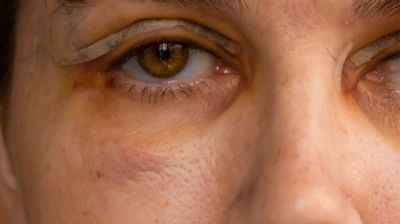
Bruising and minor bleeding are common after surgery. Rarely, a significant collection of blood can develop around the eye and requires urgent assessment because severe orbital bleeding can threaten vision. Sudden severe swelling, pain, or changes in vision require immediate medical attention.
Infection is uncommon but can occur. Patients should follow postoperative wound-care instructions and report increasing redness, swelling, drainage, fever, or worsening pain.
Temporary dryness, irritation, tearing, or sensitivity may occur during healing. These symptoms usually improve as the eyelids and ocular surface recover.
The lower eyelid may temporarily or, rarely, persistently sit lower than normal or turn outward. This can cause increased exposure of the eye, dryness, or a change in eye shape. Careful assessment of eyelid support and conservative skin removal help reduce this risk.
Temporary differences in swelling between the two eyes are common. Persistent asymmetry, residual fat, or contour irregularities may occasionally require further treatment.
Temporary difficulty fully closing the eyes can occur because of swelling or tissue tightness. Rarely, persistent lagophthalmos may develop and require treatment.
Temporary blurred vision or, rarely, double vision can occur. Serious vision loss is extremely rare but may occur with significant orbital bleeding and requires emergency treatment.
Subciliary lower blepharoplasty leaves a scar along the lower lash line. It may initially appear more visible but generally becomes less noticeable as it matures.